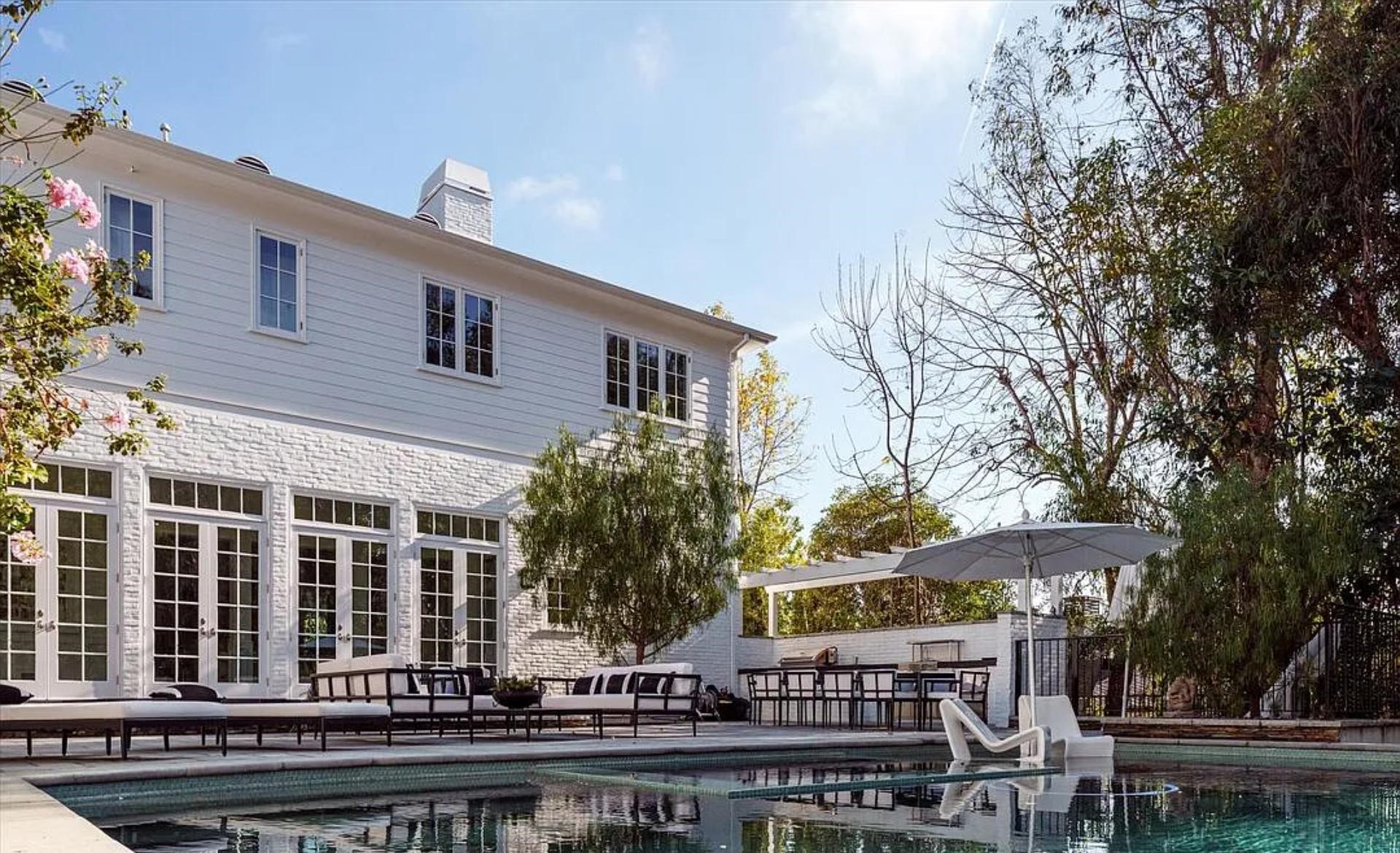

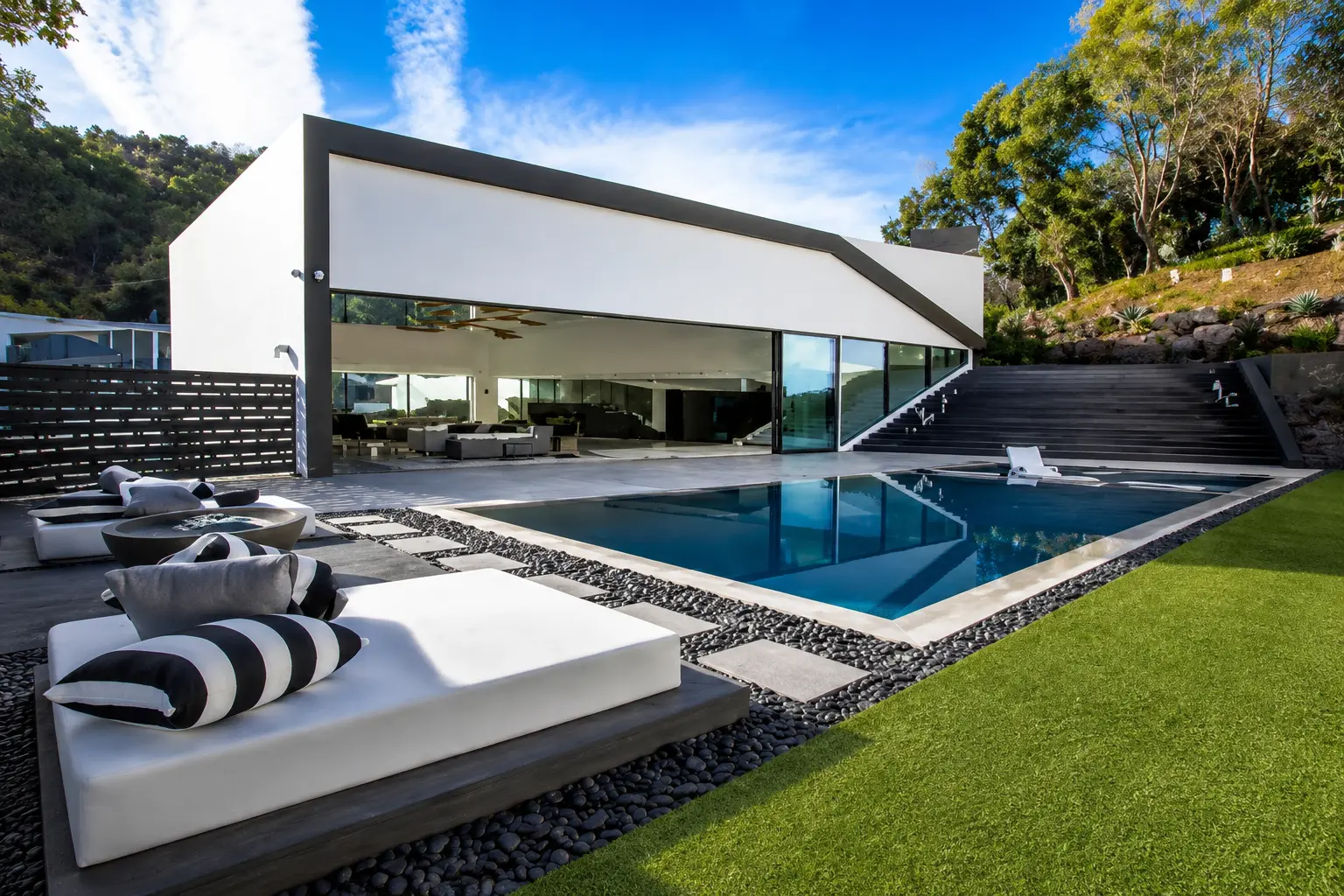
Los Angeles does not suffer from a lack of luxury rental inventory. What it lacks are short-term luxury rental experiences that function reliably for executives, high-profile individuals, relocating families, and long-stay decision makers.
Most properties marketed as “luxury” are optimized for availability and visibility, not for operational control. For executives and relocating families, private villa rentals offer the operational oversight and discretion required for a seamless stay.
The difference between browsing listings and selecting the right short-term luxury rental in Los Angeles is not price or aesthetics, but discretion, governance, and day-to-day reliability.
At the executive level, luxury is not decorative. It is operational.
What “Short‑Term Luxury Rental” Actually Means in Los Angeles
Short-term luxury rentals in Los Angeles are fundamentally different from short-stay vacation listings. These stays are typically structured for 30 to 90 days and support professional, transitional, or relocation-driven living, not leisure travel.
At this level, a luxury rental must operate as a temporary private residence, not a hospitality product. That distinction changes everything.
A true short-term luxury rental in Los Angeles includes:
- Residential-grade privacy, discretion, and security protocols
- Dedicated local or on-site management with authority to resolve issues
- Infrastructure that supports work, family routines, and autonomy
- Clear compliance with local regulations and zoning requirements
This model contrasts sharply with hotels and mass-market vacation rentals.
Hotels operate as temporary accommodation facilities, which provide service from one- to seven-night stays. The travel system offers effective transportation solutions yet requires passengers to share facilities and operate under strict service protocols, which restrict their ability to manage their travel experience.
The extended stay at a hotel results in lost privacy, which creates interruptions to work activities and leads to difficulties in managing daily operations.
Short-term luxury villas, when properly managed, remove those constraints by design.
Why Marketplaces Fail for Short‑Term Luxury Stays
Peer-to-peer marketplaces and listing platforms are optimized for scale, not governance. While they may offer visually impressive properties, they consistently underperform when the intent is executive-grade short-term living rather than casual travel.
1. Inconsistent Management Standards
Marketplace hosts vary widely in professionalism and availability. Many luxury-priced listings are unmanaged or owner-operated, creating uncertainty around maintenance, staffing, emergency response, and issue resolution.
For long-stay guests, inconsistency is a risk.
2. Regulatory and Enforcement Exposure
Los Angeles enforces strict short-term rental regulations under the Home-Sharing Ordinance. Only primary residences are eligible for most short-term permits, and licensing caps apply.
A significant portion of marketplace inventory operates outside these rules. Guests may unknowingly occupy non-compliant properties, exposing themselves to sudden cancellations, enforcement actions, or legal complications mid-stay.
Operational oversight must be established prior to occupancy.
3. Community and Neighbor Sensitivity
Open platforms attract a broad range of guests who include party-oriented renters. This situation leads to an increased chance of neighbor complaints, enforcement investigations, and subsequent enforcement actions.
For executives and high-profile individuals, even a single incident can compromise privacy, schedules, or personal security.
4. Reactive, Platform-First Support
Marketplaces prioritize platform mechanics like payments, listings, and dispute mediation. Guest-side operational support is reactive and slow, especially for maintenance, privacy concerns, or security incidents.
For decision makers operating on tight timelines, delayed escalation is unacceptable.
5. Security and Privacy Gaps
Platform policies around surveillance and privacy continue to evolve. Yet unmanaged listings often lack transparent security frameworks. For high-net-worth guests, unclear access control and undocumented security measures remain critical red flags.
Professionally Managed Villas vs Short‑Term Listings
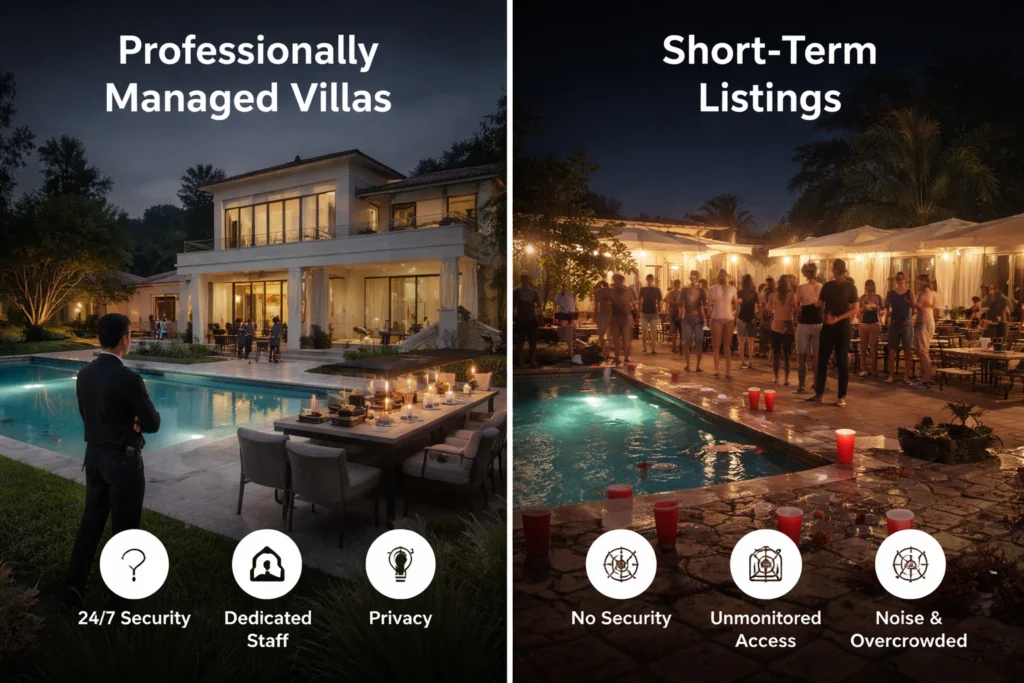
The defining factor in executive-oriented short-term luxury rentals is professional management. This is the operational backbone that separates predictable residences from gamble-based stays.
1. Dedicated Management
Professionally managed villas are supported by on-site or locally embedded teams with authority and accountability. This typically includes:
- Coordinated guest arrivals and orientation
- Scheduled housekeeping and preventative maintenance
- On-call operational support for issues or requests
- Concierge coordination aligned with professional needs
This structure eliminates “host unavailable” scenarios common in peer-to-peer environments.
2. Controlled Access & Security Frameworks
Managed villas implement structured access control, gated entries, and, when appropriate, local security personnel as well. These measures protect discretion and privacy, particularly for executives and public-facing individuals.
Security is not improvised; it is planned.
3. Compliance and Risk Mitigation
Reputable operators handle:
- Licensing and permit compliance
- Tax and regulatory documentation
- Liability coverage and risk protocols
This protects guests from unexpected disruptions and ensures continuity throughout the stay.
4. Consistency Across the Stay
A single operating entity enforces standards across cleanliness, readiness, and service delivery. Without centralized management, even high-end listings can degrade unpredictably over longer stays.
5. Executive‑Grade Support Capabilities
Managed villas can support extended operational needs such as
- Workspace configuration and connectivity
- Discreet transportation coordination
- Private staffing and household support
- Long-stay family relocation support
These align with the expectations of relocating individuals, executives on assignment, or families needing a long‑stay command base.
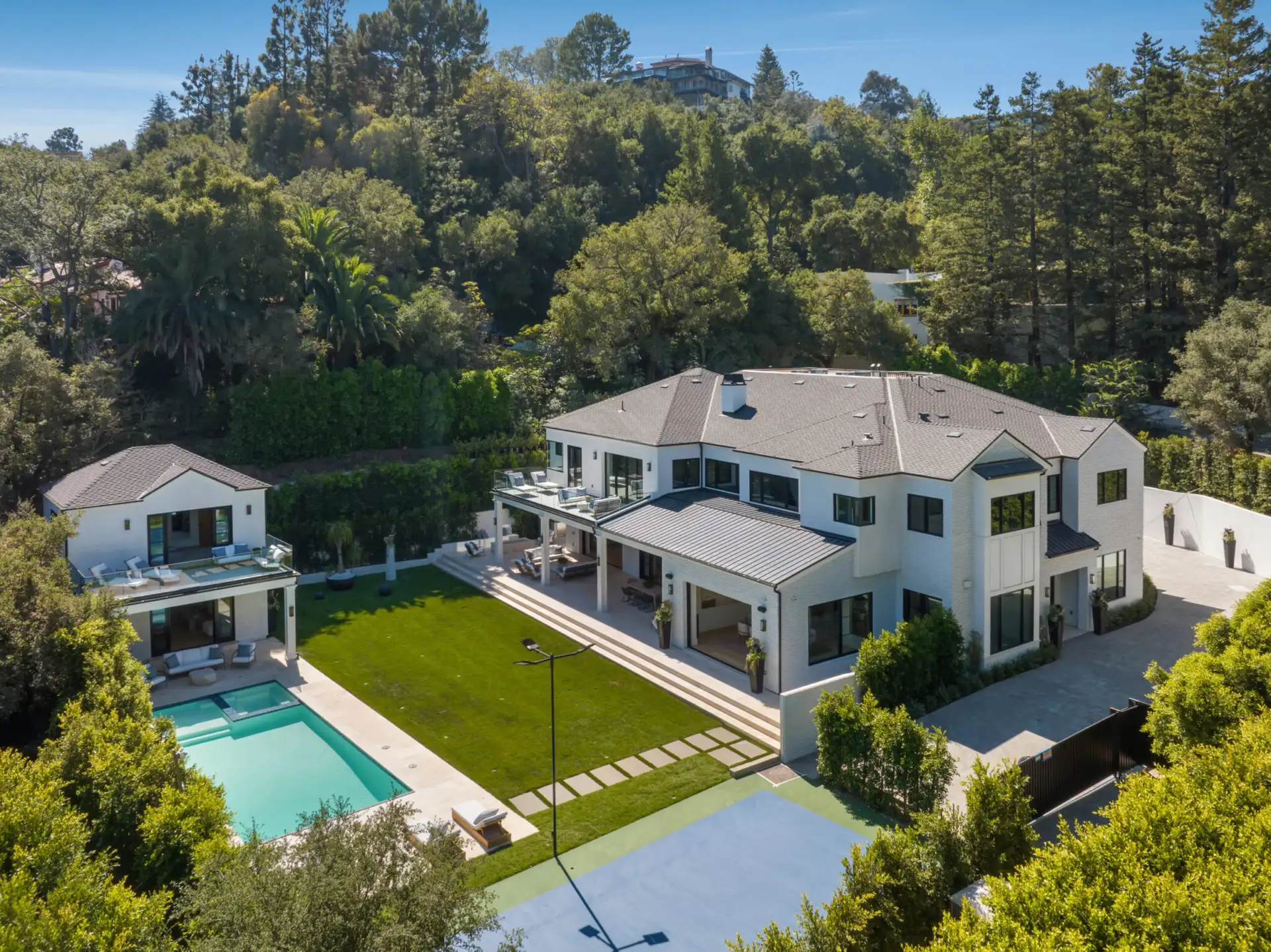
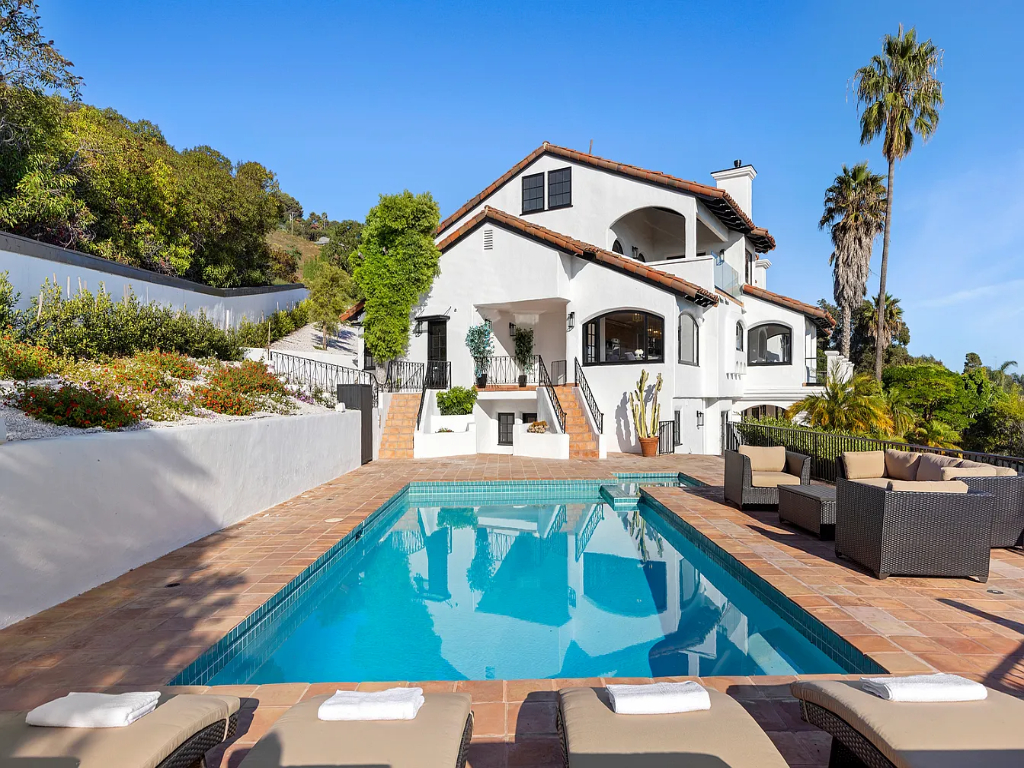
Managed villas combine operational oversight with thoughtful design, offering private pools, dedicated workspaces, and staff support, ensuring comfort and discretion for long-term executive stays.
Neighborhoods That Actually Support Short‑Term Luxury Living
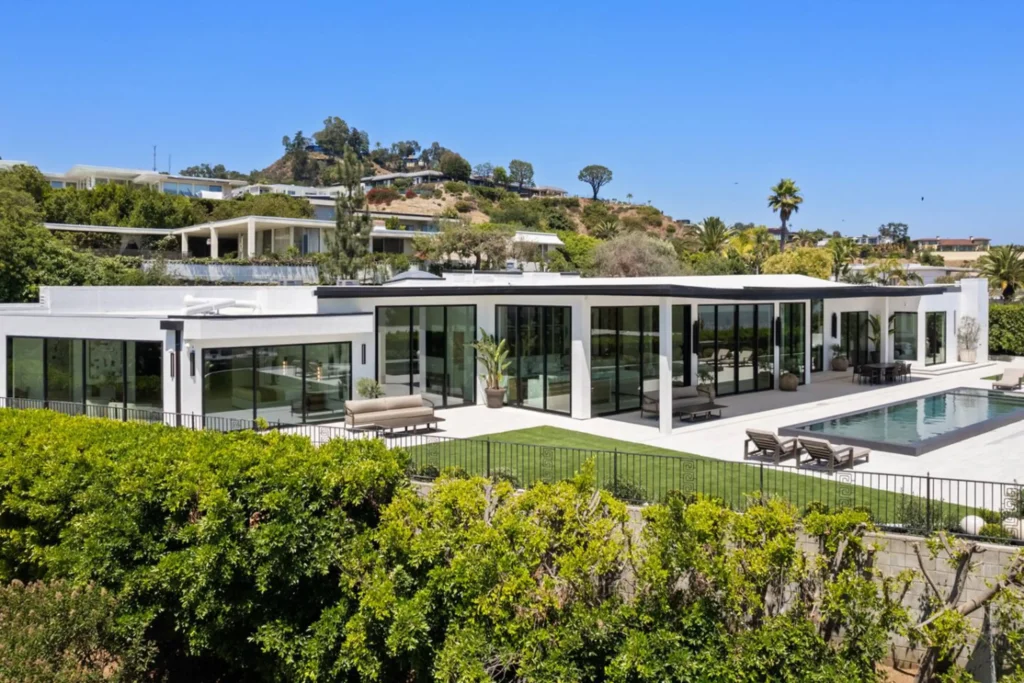
The success of a short-term luxury stay in Los Angeles depends not only on the property but also on the surrounding regulatory and community environment.
Beverly Hills and Bel Air offer established zoning structures, controlled residential norms, and mature property management ecosystems that naturally support executive-level stays. Privacy expectations are enforced culturally as well as operationally.
Hollywood Hills can serve production-oriented or creative stays due to proximity and views, but steep terrain, narrow access roads, and heightened neighbor sensitivity require experienced oversight.
Malibu offers coastal scale and discretion, yet introduces seasonal, environmental, and regulatory complexity. Successful long stays here depend heavily on local operational expertise.
Context determines suitability, not reputation alone.
Who Short-Term Luxury Rentals Are Designed For (And Who They’re Not)
Properly managed short-term luxury rentals are designed for:
- Executives on assignment, board visits, or strategic deployments
- Relocating families, establishing residential footing in Los Angeles
- High-profile individuals requiring discretion and controlled access
- Production or long-stay clients with operational demands beyond hotels
They are not designed for events, social travel, influencer activity, or entertainment-driven use. Clear positioning protects both guests and properties.
Key Risks to Eliminate Before Booking a Short‑Term Luxury Rental
Executives and decision-makers must screen rentals through an operational risk lens. Warning signs include:
- Unclear management structure, no local point of contact or operating team.
- Shared properties or subdivided listings have inconsistent privacy and unknown neighbors.
- Vague security language, lack of gated access, verified surveillance, or verified staff.
- Flexible guest policies, “party-friendly” language, or lenient event permissions signal misaligned intent.
- Emphasis on entertainment amenities instead of operational comfort. Luxury isn’t entertainment first; it’s control, safety, and utility.
A professional review of local permits, ownership structure, and support frameworks can prevent costly last‑minute issues.
Why Selection Matters More Than Inventory
At the executive scale, inventory volume does not equal suitability. Without governance, availability introduces risk rather than flexibility.
Professionally managed luxury rentals deliver predictability, discretion, and operational reliability: the true benchmarks of short-term luxury rentals in Los Angeles. Marketplaces may surface impressive properties, but without management infrastructure, they remain transactional.
When long stays intersect with professional obligations, family relocation, or high-visibility roles, the decision is not about price. It is about certainty.
Closing: Operational Reliability Defines Luxury
Short-term luxury rental decisions in Los Angeles should be rooted in operational oversight, not listing volume. The distinction between executive-ready residences and marketplace listings is clear:
- One prioritizes privacy, compliance, and tailored support.
- The other prioritizes reach and availability.
For executives, high-net-worth families, and long-stay decision-makers, the right villa is not simply a place to stay, but actually a managed asset within a larger itinerary.