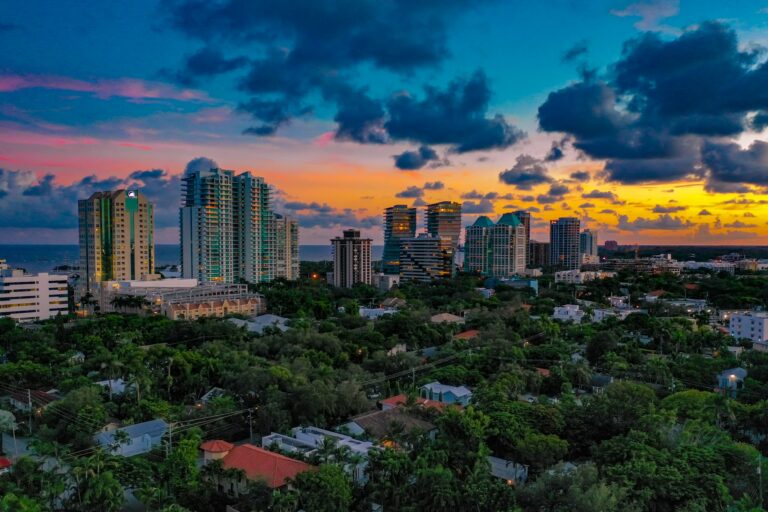
Miami’s winter season runs from Art Basel in the first week of December to the Formula 1 Grand Prix at the start of May: five dry months with afternoon highs between 76 and 84°F. Where you stay is decided less by taste than by length. Under 30 nights, 30 nights to six months, and six months and a day are three different markets with different homes, taxes and rules.
This guide is written for the two groups who use the season most seriously: executives who move their working winter to Brickell or the Beach, and families who want a school term’s worth of sun or a trial run before relocating. It covers the climate in numbers, what hotels charge, the legal line each city draws, the neighborhoods that suit each purpose, and when to commit.
Why the season is the season: the climate in numbers
The appeal is measurable. NOAA’s 1991–2020 normals for Miami International Airport put the average high at 78°F in December, 76°F in January, 78°F in February, 81°F in March and 84°F in April, with overnight lows between 61 and 70°F. January brings 1.8 inches of rain on average; June brings 10.5.
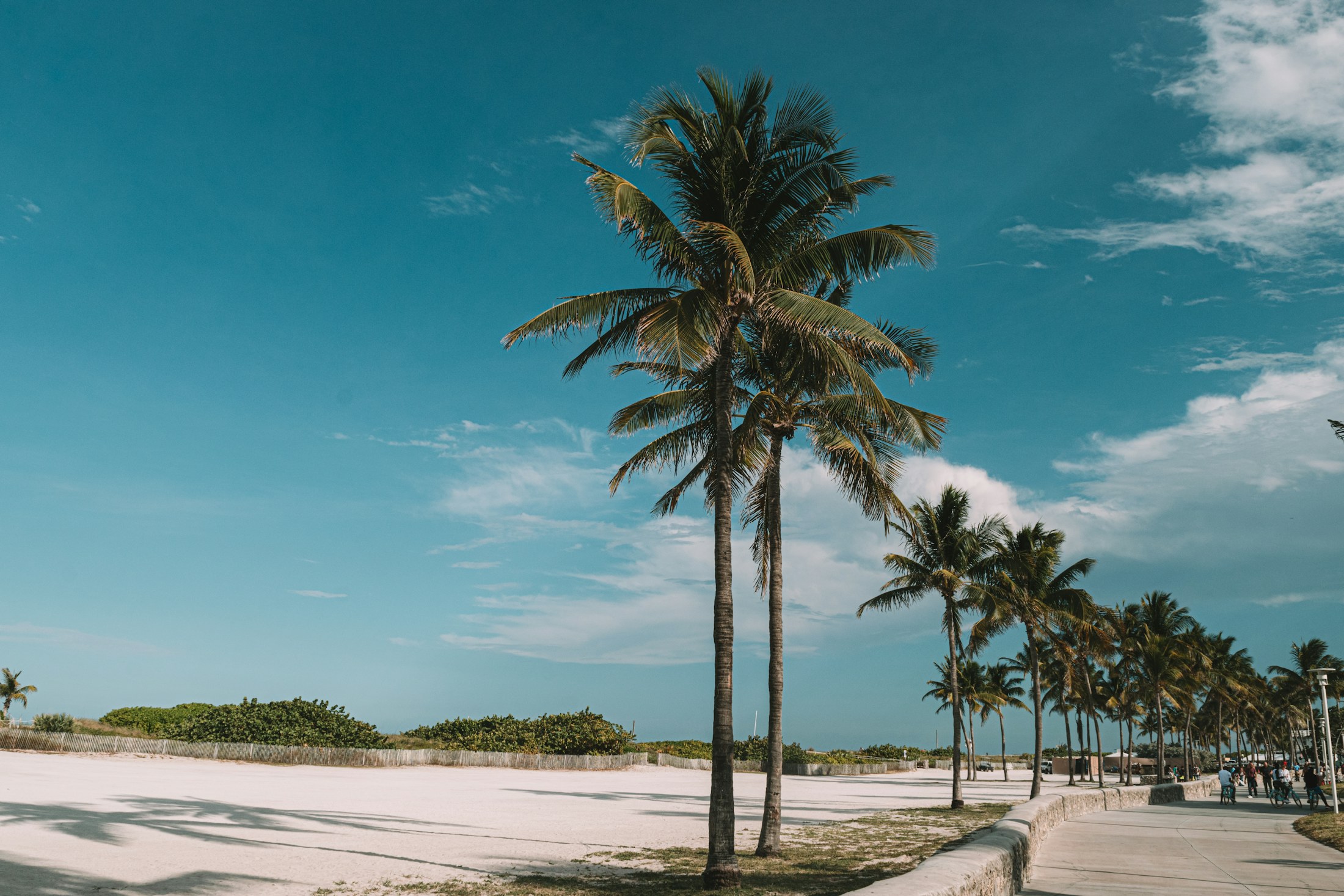
The National Weather Service in Miami dates the dry season by medians rather than fixed days: the rains typically end around October 17 and return around May 21. The Atlantic hurricane season closes on November 30 and does not reopen until June 1. The water stays swimmable throughout; NOAA’s coastal guide gives a monthly average of 72.5°F at Virginia Key in January, the coolest month, rising to 79°F in April. In practical terms, a stay from December to April sits entirely inside the dry season and entirely outside the hurricane season.
What the hotels charge, and why it matters for a house
Hotel rates are the benchmark against which every furnished home is priced, and in winter Miami’s lead the country’s major markets. The Greater Miami Convention & Visitors Bureau, using STR data, reported that the county’s hotels ran at 77% occupancy and an average daily rate of $279.70 in December 2025, 81.9% and $287.84 in January 2026, 84.9% and $322.48 in February, and 83.9% and $323.36 in March. The bureau says Miami led the top 25 U.S. hotel markets on occupancy, rate and revenue per room from January to April.
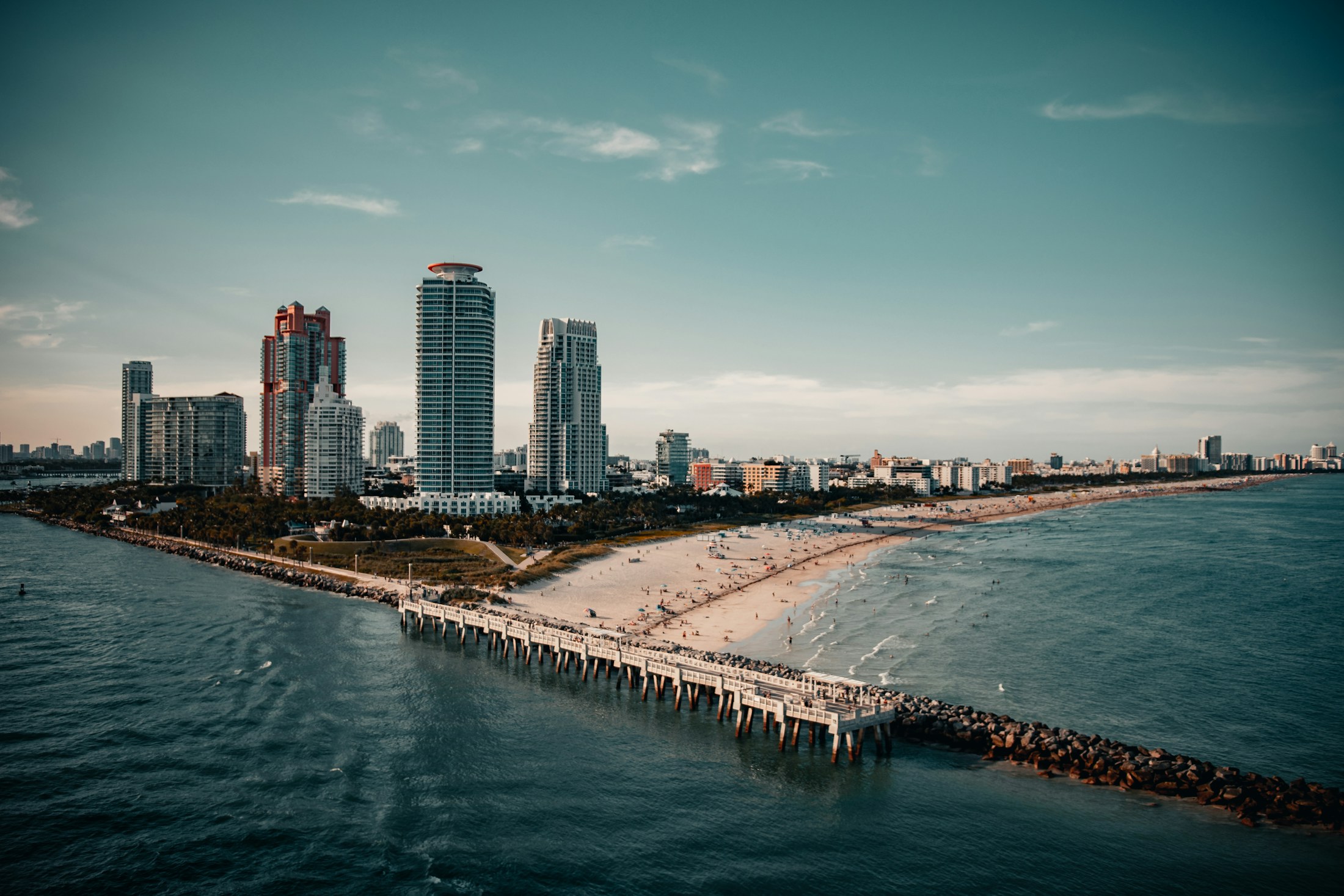
The averages conceal the top of the market. In March 2026 the average rate was $919 a night in Surfside and Bal Harbour, $495 in Coconut Grove and Key Biscayne, and $425 on Miami Beach. A family taking two rooms in Surfside for a month in March is therefore looking at something over $55,000 before tax, without a kitchen. That arithmetic, rather than any fashion for villas, is why the seasonal home market exists.
The three lengths of stay, and the rule behind each
Greater Miami is a patchwork of more than thirty municipalities, and each writes its own rental law. For a visitor the effect is that the calendar, not the listing site, determines which homes are available.
Three to ten nights
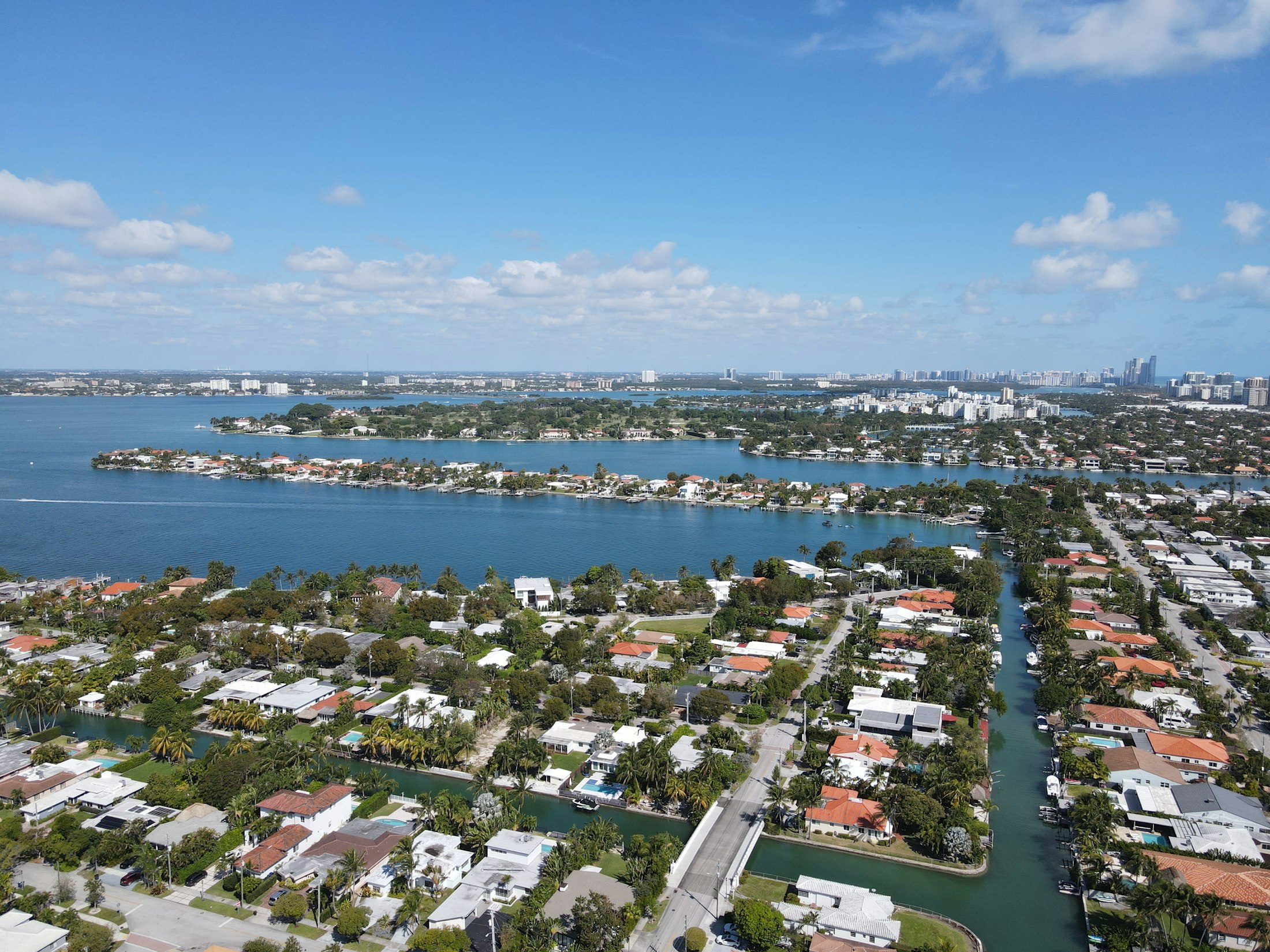
Short stays are lawful only where the zoning and the building allow them. The City of Miami treats any rental of under 30 days as a lodging use, permitted only in districts where lodging is allowed and in buildings certified for it; the city’s own guidance says single-family homes and duplexes in its T3 and T4-R residential zones are generally ineligible. Miami Beach confines short stays to particular districts and requires the operator’s business tax receipt and resort tax numbers to appear in every listing. Villoura holds licensed short-stay residences in Miami for exactly this kind of visit, a long weekend around the Art Basel fairs or a week at the Miami Open, and they are the right product for it. The grand waterfront houses are not.
Thirty nights to six months
Thirty nights is the threshold at which most of the City of Miami opens up: condominiums in Brickell and Edgewater, and houses in Coconut Grove, subject to each building’s own rules. This is the natural length for a quarter-long assignment or a January-to-March family stay, and it is the heart of our corporate housing in Miami.
Planning a luxury California stay?
Skip the guesswork. Villoura specialists match you to the right villa and handle every detail, a real person replies in minutes.
Six months and a day
The islands and the garden suburbs ask for more. Miami Beach prohibits rentals of less than six months and one day in all single-family homes, which takes in Star Island, the Sunset Islands, the Venetian Islands and North Bay Road. Coral Gables reminded residents in August 2026 that stays of under six months are not permitted in its residential zones. Surfside defines anything up to six months as a short-term rental, requires each one to be registered and allows three per property a year. A lease that begins on November 1 and ends on May 2 satisfies the six-month rule and covers the entire season. Our guide to Miami’s short-term rental rules sets out the detail by zone.
The tax line at six months
The same threshold has a price attached. The Florida Department of Revenue treats any rental of six months or less as a taxable transient rental: 6% state sales tax, plus the county surtax, plus local tourist taxes. Those local taxes total 6% in most of Miami-Dade, 7% in Miami Beach (the city’s 4% resort tax and the county’s 3% convention development tax) and 4% in Surfside and Bal Harbour, according to the department’s schedule. By our arithmetic that makes roughly 13% on a seasonal rental in Brickell or Coconut Grove, 14% on Miami Beach and 11% in Surfside. A bona fide written lease for continuous residence of longer than six months is exempt. On a home at $40,000 a month the difference between a five-month and a six-months-and-a-day agreement can exceed $25,000 in tax alone; it is worth an hour with an accountant before the dates are fixed.
Choosing a neighborhood by purpose
With the length settled, the map narrows quickly. Our overview of where to stay in Miami covers every district; for a winter of work or family life, five matter most.
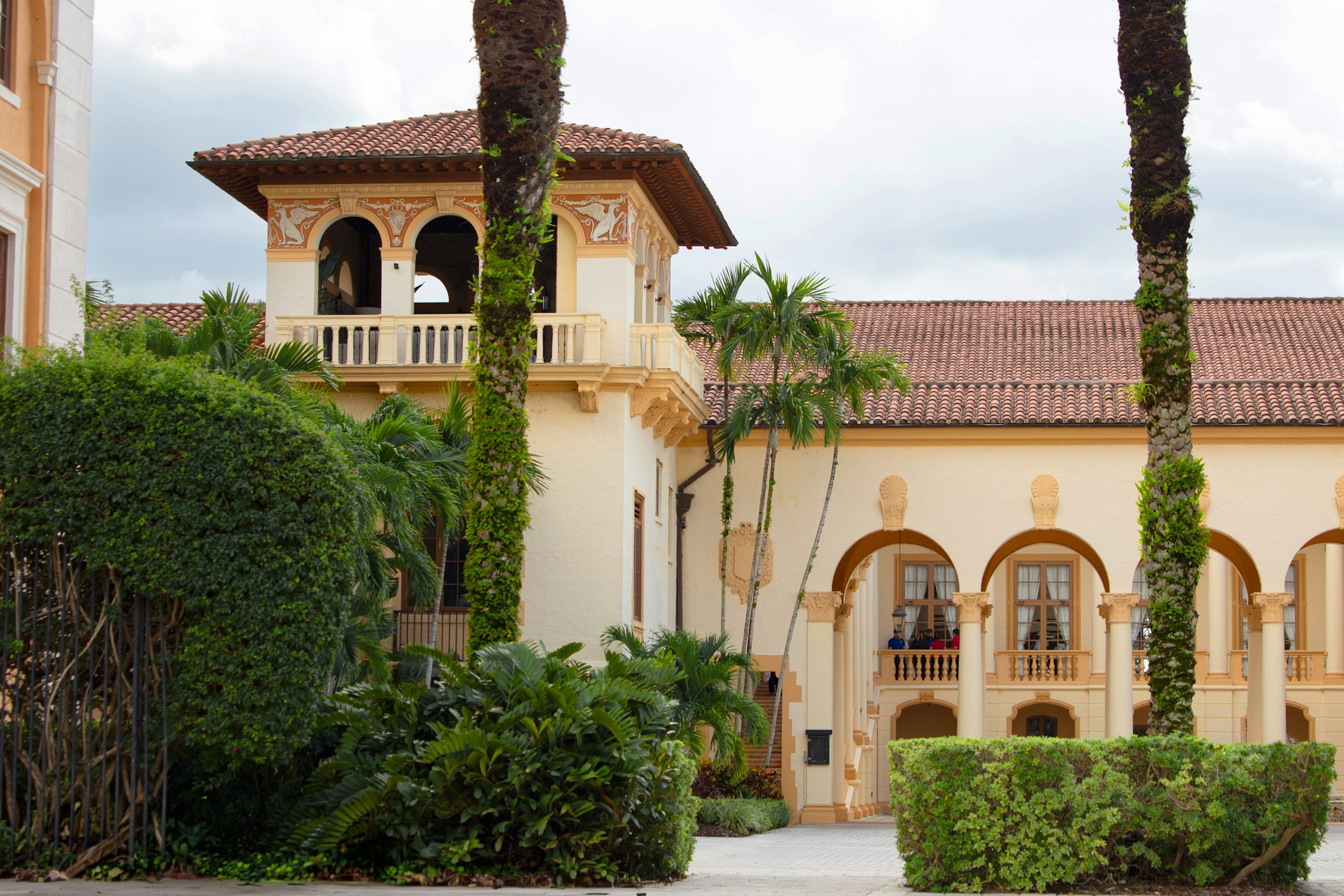
Brickell is the working address: the financial district, walkable, with towers that accept 30-night and longer leases. Our guide to Brickell for executives explains which buildings and why. Coconut Grove is the family village, with houses, gardens, sailing clubs and several of the city’s best-known private schools; see Coconut Grove for families and long stays. Coral Gables offers the same leafy character on a six-month footing. Key Biscayne is an island village of beaches and bicycles twenty minutes from Brickell across the Rickenbacker Causeway. And Miami Beach and Bal Harbour are for those who want the ocean at the end of the street and accept either a licensed residence for a short stay or a six-month lease for a house.
For executives: access, aviation and the day count
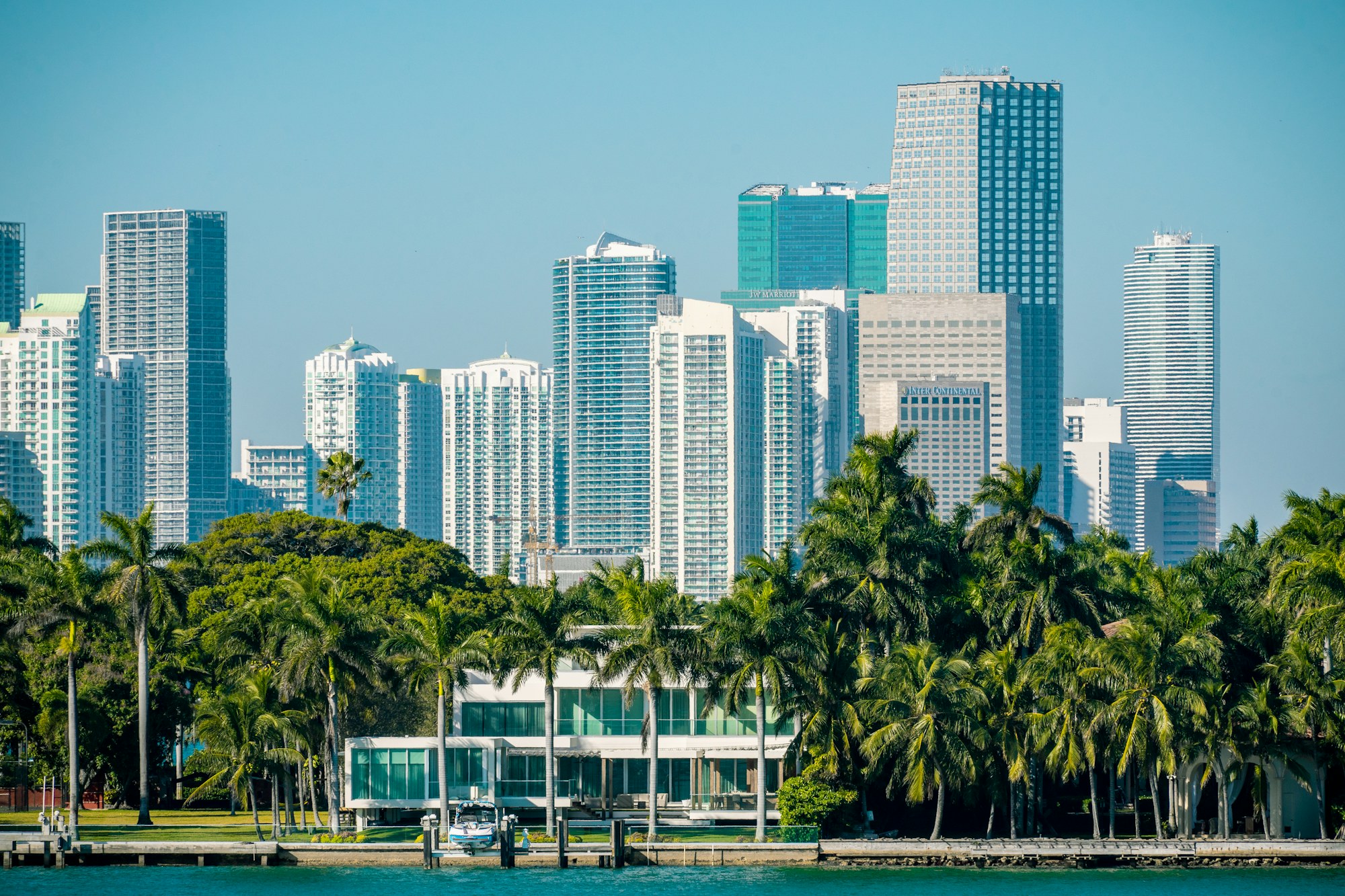
Miami works as a winter headquarters because it is easy to leave. Miami International Airport handled 55.3 million passengers in 2025 and lists 172 nonstop destinations on its August 2026 fact sheet, with more international traffic than any U.S. airport but one. Private aircraft use Miami-Opa locka Executive, which has an 8,002-foot runway, U.S. Customs from 9 a.m. to midnight and three fixed-base operators, about 35 minutes from downtown by the airport’s own estimate. Brightline trains run from MiamiCentral to Aventura, Fort Lauderdale, Boca Raton, West Palm Beach and Orlando.
Many winter residents are also counting days. Florida levies no personal income tax, but spending the season here does not by itself change where you are taxed. New York, for example, treats as a resident anyone who keeps a permanent place of abode in the state and spends more than 183 days there, and its tax department counts any part of a day as a day. A Miami lease is evidence of where you were, not a conclusion about where you live. That is a matter for your tax adviser, not your villa specialist, but it is a good reason to hold a proper written lease with clear dates.
For families: the school calendar and a candid word on admissions
Miami-Dade County Public Schools break for winter from December 21, 2026 to January 1, 2027 and for spring from March 22 to 26; the last day of school is June 3. Those are the weeks when beaches, restaurants and flights are busiest for local reasons as well as visiting ones.
Families sometimes hope to place a child in a Miami private school for a single winter term. It is rarely possible. Ransom Everglades states on its admission page that it cannot accommodate new students once a school year has begun; its application deadline for the following year is January 8, 2027, with decisions on February 26. Palmer Trinity’s regular deadline is January 15. The realistic use of a winter stay is as a scouting season: tour schools in January, apply for August, and learn which neighborhood your family actually prefers before signing anything longer. For this winter, the practical options are to time the stay around your home school’s holidays or to continue its coursework remotely.
Condominiums: the approval nobody mentions
A lease in a Miami tower is usually subject to the approval of the condominium association before move-in. Florida law lets an association charge a screening fee of up to $150 per applicant where its documents provide for one, and require a security deposit of up to one month’s rent, under section 718.112 of the state statutes. Buildings also set their own minimum lease terms and their own timetable for processing an application. None of this is onerous, but it takes time, and it is a common reason a January arrival slips. Ask for the building’s requirements before you book flights.
The season’s calendar
These are the confirmed dates that move prices and traffic. Each was checked against the organizer’s site on October 7, 2026.
| Dates | Event | Where |
|---|---|---|
| Dec 1–6, 2026 | Art Miami; Design Miami | Miami and Miami Beach |
| Dec 4–6 | Art Basel Miami Beach | Miami Beach Convention Center |
| Jan 14, 2027 | Capital One Orange Bowl (College Football Playoff semifinal) | Hard Rock Stadium |
| Jan 31 | Miami Marathon | Downtown and Miami Beach |
| Feb 10–14 | Miami International Boat Show | Miami Beach and Downtown Miami |
| Feb 13–15 | Coconut Grove Arts Festival | Coconut Grove |
| Feb 25–28 | South Beach Wine & Food Festival | Miami Beach |
| Mar 14–28 | Miami Open (dates subject to change) | Hard Rock Stadium |
| Mar 26–28 | Ultra Music Festival | Bayfront Park |
| Apr 30–May 2 | Formula 1 Miami Grand Prix | Miami International Autodrome |
The pressure points are the first week of December, when the art fairs fill the Beach, mid-February, when the Boat Show and the Coconut Grove Arts Festival overlap with Presidents’ Day, and the last two weeks of March, when the Miami Open, Ultra and the public schools’ spring recess coincide. Owners will find the same calendar read from their side in our Miami events calendar for homeowners.
When to commit, and what to verify
Seasonal homes are a finite stock, and the best tend to be let for the whole winter rather than by the month. A household that wants December to April in a house with a garden and a dock should be choosing in October, not after Thanksgiving. Shorter winter stays have more room, though February and March weeks go first.
Verify the paperwork as carefully as the photographs. In August 2026 the City of Miami issued a cease-and-desist order to a 643-unit Brickell condominium, The Club at Brickell Bay, over alleged hotel-style short-term renting, as NBC6 and the Miami Herald reported. A guest who books an unlicensed unit carries the risk of the booking ending early. Ask the operator for the licence or registration that applies to the length of your stay; a reputable one will have it to hand.
For owners: the season from the other side
For the owner of a home in Coconut Grove, Coral Gables or on the islands, winter is when the year’s income is made, and the decision is which of two lawful products to offer: a single six-months-and-a-day lease that captures the whole season free of transient tax, or, where the property is licensed for it, short stays priced against the hotel rates above. The answer depends on the zoning, the building and the owner’s own use of the house. Villoura advises owners on both; you can talk to us about a home before the season begins.
Frequently asked questions
When is the winter season in Miami?
The season runs from early December to the end of April. It opens with Art Basel Miami Beach (December 4–6, 2026) and effectively closes with the Formula 1 Miami Grand Prix (April 30–May 2, 2027). The whole period falls inside the dry season and outside the Atlantic hurricane season, which ends on November 30.
How warm is Miami in winter?
NOAA’s 1991–2020 normals give average highs of 78°F in December, 76°F in January, 78°F in February, 81°F in March and 84°F in April, with lows between 61 and 70°F. January averages about 1.8 inches of rain, and the sea at Virginia Key averages 72.5°F in its coolest month.
Can I rent a house in Miami Beach for one month in winter?
Not a single-family home. Miami Beach prohibits rentals of less than six months and one day in all single-family houses. A one-month stay on the Beach is placed in a licensed residence in a district that permits short-term rental, or in a hotel. Houses in the City of Miami, such as in Coconut Grove, are generally available from 30 nights.
What taxes apply to a seasonal rental in Miami?
Florida taxes rentals of six months or less as transient rentals. With state sales tax, the county surtax and local tourist taxes, the total is roughly 13% in most of Miami-Dade, 14% in Miami Beach and 11% in Surfside and Bal Harbour. A bona fide written lease of longer than six months is exempt.
How far ahead should I book a winter rental in Miami?
For a full-season house, begin in early autumn; the best homes are let for the whole winter. For stays of a few weeks there is more flexibility, but February and March, which contain the Boat Show, the Miami Open and spring break, are taken first.
Which Miami neighborhood is best for a winter stay with children?
Coconut Grove, Coral Gables and Key Biscayne are the usual choices: houses with gardens, parks and sailing nearby, and a quieter pace than the Beach. Coconut Grove permits stays from 30 nights in many homes; Coral Gables requires six months.
Plan your winter with Villoura
Villoura arranges licensed short-stay residences, furnished homes for 30 nights and longer, and full-season leases across Miami, with boats, chefs, drivers and reservations handled by our Miami concierge. Tell us your dates, who is travelling and what the days need to hold, and a Villoura villa specialist will reply with the homes that can lawfully host your stay, usually within fifteen minutes during business hours.
Sources: NOAA National Centers for Environmental Information; National Weather Service Miami; National Hurricane Center; Greater Miami Convention & Visitors Bureau (STR data); City of Miami; City of Miami Beach; City of Coral Gables; Town of Surfside; Florida Department of Revenue; Florida Statutes s. 718.112; New York State Department of Taxation and Finance; Miami-Dade County Public Schools; Ransom Everglades School; Palmer Trinity School; Miami International Airport; Brightline; NBC6; Miami Herald; event organizers. Verified October 7, 2026. This guide is general information, not legal or tax advice.